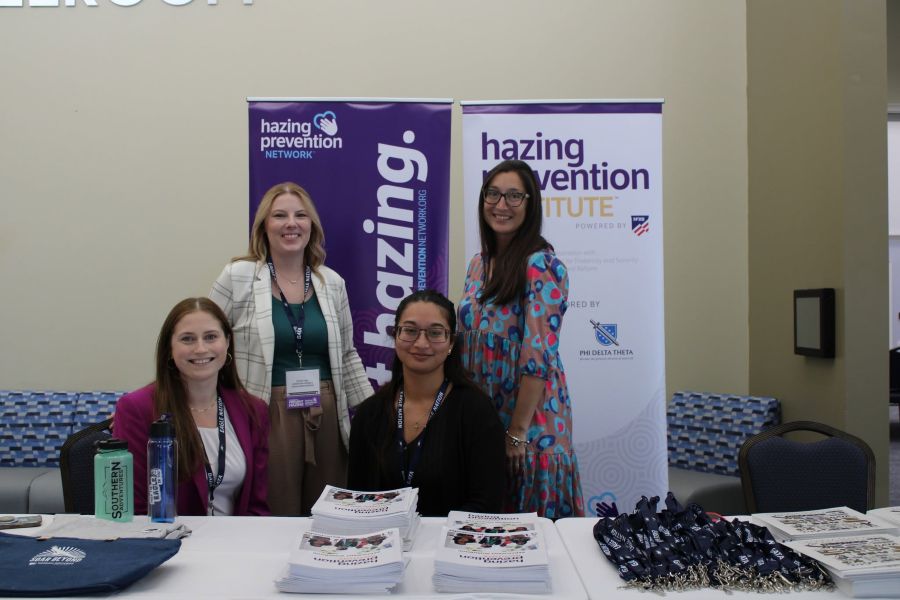
Georgia Southern University is committed to maintaining a safe, healthy, and supportive learning environment free from all forms of hazing. To promote institutional accountability and comply with Georgia’s Max Gruver Act (𝑂.𝐶.𝐺.𝐴.§16−5−61) and the federal Stop Campus Hazing Act, this central portal serves as the university’s single official hub for hazing prevention education, reporting avenues, student conduct investigation procedures, and multi-year incident disclosures.
Reports of hazing may be submitted to the Office of Student Conduct here or through the Ethics & Compliance Reporting Hotline by calling 1-877-516-3445 or submitting a report online. The complete policy and procedures are available online.
Public Disclosure
The University’s Hazing Transparency Report fulfills the requirements of the Stop Campus Hazing Act and Georgia’s Max Gruver Act. This report includes all student organizations found responsible for hazing violations and is updated in accordance with federal and state requirements.
Click here to view the Campus Hazing Transparency Report & Max Gruver Act Public Disclosure page.
Privacy Notice: In accordance with the Family Educational Rights and Privacy Act of 1974 (FERPA), this report shall not include or otherwise reveal any personally identifiable information.
Data Retention Note: All reported hazing violation findings are maintained on this central portal for a minimum of five (5) calendar years from the date of publication, with reports updated at least twice annually and within fifteen (15) calendar days of final adjudication pursuant to Georgia’s Max Gruver Act
Policy & Statutory Definitions
Hazing means any intentional, knowing, or reckless act committed by a person (whether individually or in concert with other persons) against another person or persons regardless of the willingness of such person or persons to participate, that:
- Is committed in the course of an initiation into, an affiliation or connection with, the maintenance of membership in, or any other condition or precondition connected to a student organization or school organization; and
- Causes or creates a risk, above the reasonable risk encountered in the course of participation in institution or organization activities (such as the physical preparation necessary for participation in an athletic team), of physical or psychological injury including:
- Whipping, beating, striking, electronic shocking, placing of a harmful substance on someone’s body, or similar activity;
- Causing, coercing, or otherwise inducing sleep deprivation, exposure to the elements, confinement in a small space, extreme calisthenics, or other similar activity;
- Causing, coercing, or otherwise inducing another person to consume food, liquid, alcohol, drugs, or other substances;
- Causing, coercing, or otherwise inducing another person to perform sexual acts;
- Any activity that places another person in reasonable fear of bodily harm through the use of threatening words or conduct;
- Any activity against another person that includes a criminal violation of local, state, tribal, or federal law; and
- Any activity that induces, causes, or requires another person to perform a duty or task that involves a criminal violation of local, state, tribal, or federal law.
An organization (such as a club, society, association, corporation, order, varsity or junior varsity athletic team, club sports team, fraternity, sorority, band, student government, or group living together) in which two or more of the members are enrolled students or alumni, including local affiliate organizations, whether or not the organization is formally established or recognized by the university.
Georgia Hazing Law Summary
Under Georgia law, hazing is defined as any intentional, knowing, or reckless act that endangers the physical health or safety of a student for the purpose of initiation, admission into, affiliation with, or continued membership in any organization.
Hazing is a criminal offense in the state of Georgia. Individuals found responsible for hazing may face misdemeanor or felony charges, depending on the severity of the conduct and resulting harm. In addition to potential criminal penalties, individuals and organizations may also be subject to University disciplinary action.
Georgia’s Max Gruver Act further requires colleges and universities to publicly disclose hazing violations where student organizations are found responsible. These disclosures are intended to promote transparency and accountability within the campus community.
Clery ASR Notice & Annual Stats Link
Annual Hazing Statistics & Clery Act Disclosure
In compliance with federal law, annual statistics regarding reported hazing incidents are published in Georgia Southern University’s Clery Annual Security Report (ASR). To review annual crime statistics, safety policies, and institutional disclosures, please visit our official Clery Annual Security Report Page.
Student Conduct Investigation & Adjudication Process
Georgia Southern University prohibits hazing. This prohibition applies to Georgia Southern University students, Registered Student Organizations, and any Group or Organization as defined in the Code of Student Conduct, including athletic teams, club sports, bands, student government, and local affiliate or unrecognized groups, covering conduct both on and off campus.
Hazing is defined as any intentional, knowing, or reckless act connected to joining, becoming affiliated with, or maintaining membership in an organization that causes or creates a risk of physical or psychological harm,
including sleep deprivation, forced consumption, extreme calisthenics, sexual acts, or criminal violations.
Reports of hazing may be submitted to the Office of Student Conduct here or through the Ethics & Compliance Reporting Hotline by calling 1-877-516-3445 or submitting a report online. The complete policy and procedures are available online.
Hazing allegations involving students or student organizations are investigated by the Office of Student Conduct under the Code of Student Conduct. After a report is received, the Office of Student Conduct reviews the information, determines how the matter should proceed, and may impose temporary or interim measures.
The investigator interviews witnesses, reviews evidence, and prepares a report to determine responsibility using the preponderance of the evidence standard. If found responsible, sanctions range from disciplinary warnings to permanent expulsion, and final outcomes are published in Georgia Southern University’s Campus Hazing Transparency and Max Gruver Report available here.
Pursuant to Georgia’s Max Gruver Act (O.C.G.A.§16-5-61), final findings of responsibility for hazing violations involving student or school organizations are updated and published on this central portal within fifteen (15) calendar days of final adjudication or disciplinary resolution.
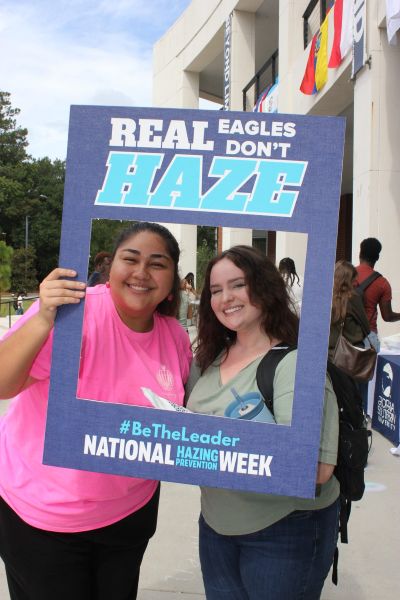
National Hazing Prevention Week
National Hazing Prevention Week, observed each September, raises awareness about hazing through campus and organizational programs focused on education, prevention, and accountability.
Our goal is to engage students, staff, faculty, families, and communities across all Georgia Southern campuses in building a culture of safety and respect.
Campus-Wide Prevention & Education
Georgia Southern University implements research-informed, campus-wide hazing prevention programs designed to educate students, faculty, and staff. These programs focus on preventing hazing behaviors, promoting accountability, and fostering a culture of respect.
Hazing prevention efforts include online education modules, student organization training, leadership development, and campus-wide awareness initiatives such as National Hazing Prevention Week.
The University’s hazing prevention efforts emphasize primary prevention strategies, including:
- Bystander intervention: Empowering individuals to recognize and safely intervene in situations that may lead to hazing
- Ethical leadership development: Promoting values-based decision-making and accountability within student organizations
- Healthy group development: Encouraging team-building practices that foster belonging without harm or coercion
- Community responsibility: Reinforcing shared expectations for creating a safe and inclusive campus environment
Georgia Southern University is committed to preventing hazing through education, accountability, and transparency. Prevention and awareness efforts include education on how to recognize and report hazing, an understanding of how reports are investigated through the student conduct process, and information about applicable laws and institutional policies.
Students, staff, and organization members are encouraged to take an active role in creating a safe and respectful campus environment by reporting concerns and participating in educational programs designed to eliminate hazing.
- Hazing Prevention 101 – Learn how to recognize, report, and prevent hazing.
- Fraternity & Sorority Life – Understand the specific challenges and responsibilities in our Greek community.
Together, We Prevent Hazing
Georgia Southern University is committed to protecting students and holding organizations accountable.