
Georgia Southern professor named 2026-2027 Fulbright US Scholar to study health innovations in Brazil
Matthew Flynn, Ph.D., professor of international studies and sociology in Georgia Southern University’s College of Behavioral and Social Sciences, has been awarded a 2026-27 Fulbright U.S. Scholar grant. Flynn will spend four months in Brazil researching how developing nations build innovation systems capable of addressing major public health challenges through the creation of new medicines and treatments.
“Dr. Flynn’s Fulbright recognition reflects the kind of globally engaged scholarship that defines academic excellence at Georgia Southern,” said Avinandan Mukherjee, Ph.D., provost and executive vice president for Academic Affairs. “His work demonstrates how faculty research can address complex global challenges while creating meaningful opportunities for international collaboration, student learning and institutional growth.”
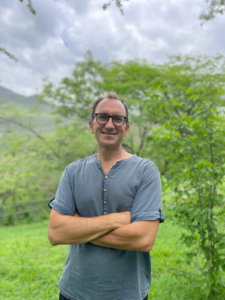
According to Flynn, his selection is both a professional milestone and the culmination of a personal journey that began decades ago.
“Brazil has been a constant in my life for many years. I’ve lived there, reported there and built my academic career around understanding its institutions,” he said. “Getting the chance to go back as a Fulbright Scholar and do this research feels like everything is coming full circle.”
Flynn first traveled to Brazil as a Rotary Ambassadorial Fellow at the University of São Paulo, immersing himself in the country’s language and culture. There, he became proficient in Portuguese while building a deeper understanding of Brazil’s political and economic systems.
He later returned to work as a local newspaper journalist and a foreign correspondent, experiences that gave him firsthand exposure to the country’s institutions, industries and social challenges.
Flynn’s connection to Brazil eventually became the foundation of his doctoral research, spending months in the country conducting fieldwork while earning his Ph.D. in sociology from the University of Texas at Austin.
His work focused on pharmaceutical policy and access to medicine that later became the basis for his 2015 book, “Pharmaceutical Autonomy and Public Health in Latin America,” which examined Brazil’s efforts to expand access to AIDS medications.
Despite his deep ties to Brazil, Flynn said applying for the Fulbright still felt daunting. The highly competitive program required not only experience, but a compelling vision for how his work could create broader impacts globally.
Flynn credits David Weindorf, Ph.D., Georgia Southern’s vice president for Research and Economic Development and former Fulbright Scholar, with helping demystify the process.
“It was incredibly helpful to have his guidance and support,” Flynn said. “Dr. Weindorf’s insight gave me a better understanding of how to frame my own project.”
The mentorship helped transform an idea Flynn had been developing for years into a unique proposal that targeted real-world needs.
“Dr. Flynn’s Fulbright award reflects years of meaningful scholarship and international relationship-building,” Weindorf said. “His work addresses complex global health challenges while creating opportunities for international collaboration that align directly with Georgia Southern’s growing research mission. We’re incredibly proud to see his work recognized on this level.”
Flynn chose Brazil to conduct his field research because the country presents a particularly complex case study due to its significant investments in both public health initiatives and pharmaceutical production; yet it continues to face challenges developing new treatments for both infectious diseases and chronic illnesses forcing the country to rely heavily on importations.
His work will examine what happens when universities, private industry and government agencies attempt to work together to solve those challenges.
“When those partnerships work well, innovation can happen quickly,” according to Flynn. “When they do not, important medical breakthroughs can stall.”
An important aspect of his research will be interviews with scientists, policymakers and pharmaceutical leaders, as well as site visits and archival research aimed at understanding why some innovation efforts succeed while others fail.
Flynn’s research impact will extend far beyond Brazil. Many middle-income countries face similar challenges balancing economic growth, public health needs and dependence on imported medical technologies.
His goal is to help policymakers better understand how countries can build stronger domestic health innovation systems while expanding access to affordable treatments. The findings could help shape future policy conversations surrounding vaccines, chronic disease treatments and pharmaceutical access worldwide.
His experience will also directly benefit Georgia Southern students as he will bring insights back to his classroom and infuse them into courses focused on global health, world cultures and Latin American studies.
He hopes that the Fulbright experience will strengthen institutional partnerships between Georgia Southern and Brazilian universities, creating future opportunities for collaborative research and study abroad experiences.
“Dr. Flynn’s Fulbright award reflects the kind of meaningful global engagement we’re continuing to build at Georgia Southern,” said Danielle Smith, assistant provost for Global Engagement. “These experiences create opportunities for faculty collaboration, student learning and international partnerships that strengthen our University’s global presence in powerful ways.”
Throughout his extensive résumé of international research and travel, Flynn said what continues to draw him back to Brazil is simple: its people.
Over the years, he has lived in São Paulo, Ouro Preto, Rio de Janeiro and Salvador, building relationships that extend far beyond professional collaborations.
“This work is about research,” Flynn said. “But it’s also about relationships, cultural exchange and understanding how countries can learn from one another.”