
Georgia Southern receives historic funding to curb isolation among older adults and people with disabilities
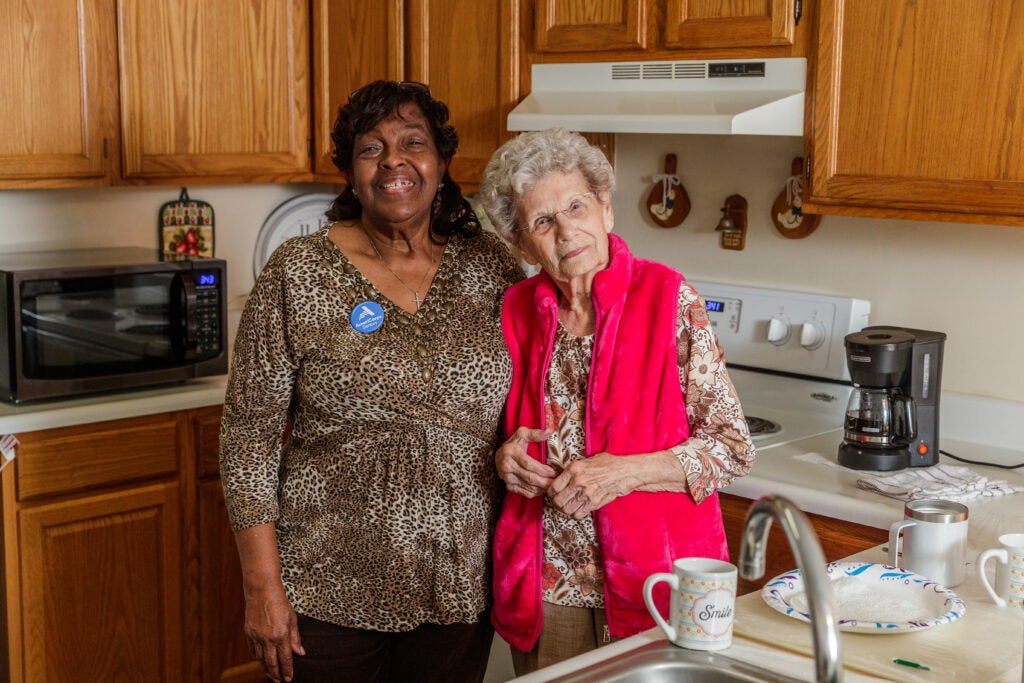
While illustrating the importance of Georgia Southern University’s Senior Companion Program, Deb Blackburn, the program’s director, recalled one situation with potentially deadly consequences.
“There was a woman on our waiting list who lived alone and was very sick,” she said. “We went to check on her, and could smell the natural gas. She had a leak that no one knew about. We got her out of the house immediately, and called the fire department. The woman quickly recovered.”
Efforts to prevent those kinds of incidents received a major boost in the form of a $378,000 grant increase from AmeriCorps Senior. Effective July 1, the funding is one of three equal installments arriving over the next three years. It’s part of the largest-ever award for the program housed in the College of Behavioral and Social Sciences’ Center for Social Gerontology.
Sometimes called “companions,” volunteers, 55 and older, are paired with seniors needing support to live independently in their homes. They provide socialization while assisting with meal preparation, household chores and occasional transportation.
Clients live in 15 counties across southeastern Georgia including Bulloch, Emanuel and Effingham. These counties, plus six more, have waiting lists. The new contract no longer divides the funds by location, meaning volunteers can go to areas of greatest need. Currently, there are 7 vacancies for volunteers.
Other benefits include an hourly stipend, better travel reimbursement rates for volunteers and the doubling of their daily meal stipend from $1.50 to $3. These changes are significant, because companion eligibility requires an annual individual income no higher than $31,920.
Theretha Alston has been one of those companions for four years. Until recently, she visited Beatrice Huff, a 94-year-old Bulloch County resident. Huff’s own work with the program inspired Alston to get involved.
“I heard about the program by word of mouth, at the time, Beatrice was still working as a companion,” she said. “Seeing her so excited about the program at the age of 90 inspired me on a daily basis. I thought to myself ‘What if I could be like that at her age?’ She just retired last year.”
Alston spent four days a week with Huff for five hours each day helping with her lunch, her exercises and walks to the mailbox. Unfortunately, Alston needed to be paired with another senior for logistical reasons. Still, she cherishes the conversations she shared with Huff.
“My favorite part was hearing about her history,” she said. “She would start talking about her childhood, her school days, meeting her husband, raising a family and her grandkids. Then she would start smiling for sure.”
Blackburn emphasized that social connections like this can improve quality of life for isolated individuals
“To me, that’s one of the best examples of how our participation in the community helps people who are alone and don’t have the capacity to take care of all their household needs,” she said.